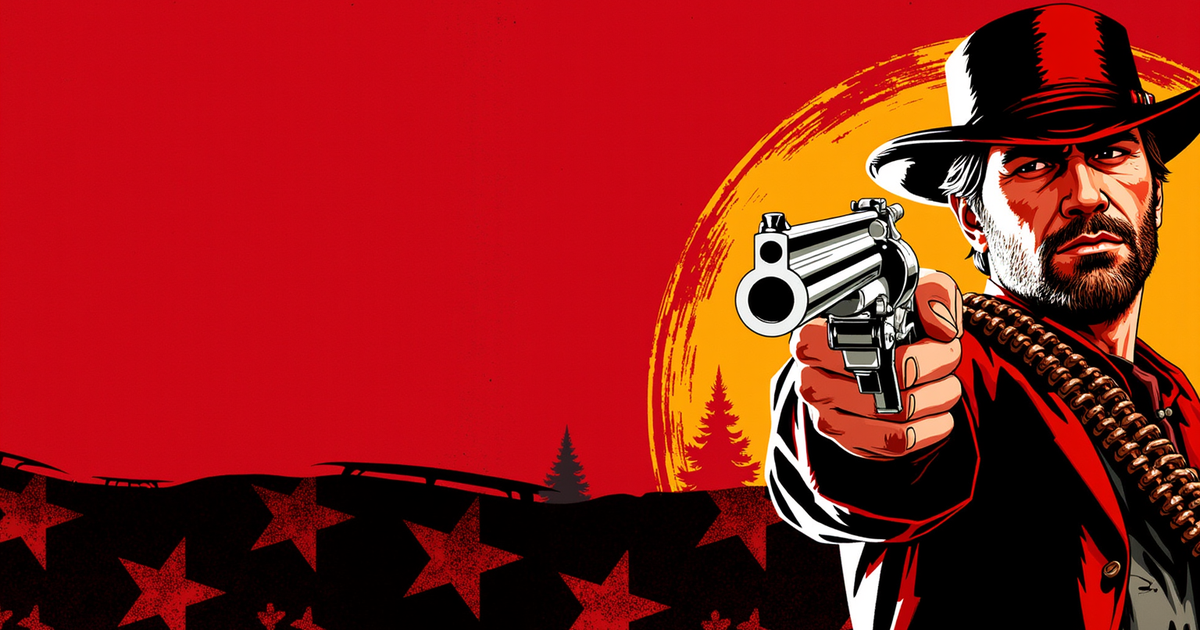

Red Dead Redemption 2 launched in 2018. You thought about buying it then. You did not. Or you bought it, played 10 hours, got distracted, and have not touched it since. Eight years later, does it still make sense to start Red Dead 2 in 2026, especially if your gaming time is weekends-only? Yes. Specifically yes. Here is the case for a 2026 Red Dead Redemption 2 playthrough at weekend pace.
This is the RDR2-specific member of our pillar on what to play before GTA 6. A practical guide for weekend-only gamers considering Rockstar’s 2018 masterpiece.
The short version
- Red Dead 2 is still excellent in 2026. Graphics hold up, story is timeless, gameplay is deliberate but rewarding.
- Weekend-only completion is 3-5 months for the main story. Achievable with discipline.
- The deliberate pacing of RDR2 is a feature for busy adults, not a bug. It is not trying to be fast.
- Best platform in 2026: PS5/Xbox Series with backward compatibility (60 FPS patches or mods). PC via Steam for mods and resolution.
- Skip the online mode. Story mode is the experience.
Why Red Dead 2 still matters
RDR2 is the last great Rockstar single-player game before GTA 6. If you want to understand what Rockstar storytelling looks like at its peak before entering the GTA 6 era, RDR2 is the text. Skipping it means entering GTA 6 without the recent Rockstar context.
It is also genuinely one of the top 10 games of the 2010s. Not “you should play it because it is a GTA prequel.” You should play it because it is good.
Weekend-only completion pacing
Red Dead 2 main story is roughly 50-80 hours. Weekend-only means 4-8 hours per week typically.
At 4 hours/week: 12-20 weeks. 3-5 months.
At 6 hours/week: 8-13 weeks. 2-3 months.
At 8 hours/week: 6-10 weeks. 1.5-2.5 months.
Most adult weekend gamers land at 5-6 hours effective per week. Budget for 3 months. Plan accordingly.
Act-by-act structure
RDR2 has 6 chapters plus epilogue.
Chapters 1-2 (10-15 hours): introduction. Move slowly. Explore. Do not rush. This is when you decide whether you love the pace or hate it.
Chapter 3 (10-15 hours): Clemens Point. Many of the best missions and story beats. Pace picks up.
Chapter 4 (8-12 hours): Saint Denis. Tonal shift to urban content. Some of the most memorable sequences.
Chapter 5 (6-10 hours): major story turning point. Shorter but dense.
Chapter 6 (15-20 hours): back to Beaver Hollow. Emotional peak.
Epilogue (10-15 hours): plays like its own game. Do not skip. The epilogue is as important as the main story.
What weekend-only pacing actually looks like
To set expectations concretely. A typical 3-month RDR2 weekend playthrough looks something like this.
Month 1 (weeks 1-4): Chapters 1-2. You are learning controls, adjusting to the slower pace, meeting the camp, doing early missions. Progress feels slow because the game is teaching you. By week 4 you should be exiting Chapter 2.
Month 2 (weeks 5-8): Chapters 3-4. Clemens Point and Saint Denis. The best stretch of the game. You will feel real story momentum. Do not rush; these chapters reward exploration. By week 8 you should be through Saint Denis.
Month 3 (weeks 9-12): Chapters 5-6 and the start of the epilogue. Emotional peak. The epilogue pulls you into a whole second game. Budget additional weeks if you want to finish the full epilogue cleanly.
Total realistic window for a completionist-lite weekend playthrough is 14-18 weeks. Call it 4 months. Planning for 3 months and allowing slippage is honest.
Weekend session strategy
For 2-4 hour Saturday sessions specifically.
Start with a deliberate session plan. “Today I want to finish chapter 3 mission X plus exploration.” Not “I will play for a while.”
Do one main mission plus one or two side activities per session. This keeps story momentum without burning out on combat.
Save manually before long missions. RDR2 autosaves but the triggers are not always at convenient points.
Stop after a mission conclusion, not mid-mission. Resume fresh next weekend.
Budget for 2.5-3.5 hour sessions. RDR2 rewards immersion. A 90-minute session often does not complete anything meaningful.
Camp, bonding, and the slow mechanics
RDR2 has a camp you return to. Contributing to the camp, bonding with your horse, and maintaining your own hygiene are optional but core to the feel.
Camp contributions. Donate money and hunted meat. Keeps morale up. Camp morale affects which conversations and interactions happen. Weekend gamers should make small contributions every 2-3 sessions; you do not need to max camp, but total neglect removes content.
Horse bonding. Feed, brush, and ride your horse regularly. Higher bond unlocks tricks and better stamina. For weekend play, a single “starter” horse ridden the whole game is fine. Do not swap horses constantly; the bond resets.
Arthur’s grooming. Shave, change clothes, eat. Missing these degrades Arthur’s appearance and slightly his stats. Do them at camp once per session; 2 minutes of upkeep. Skip the mechanics and the game quietly penalizes you without explaining why.
Deadeye and cores. Health, stamina, and deadeye cores drain with activity and need food and sleep. Keep cores topped off between missions. Eating on the trail is a minute’s action.
None of this is mandatory, but RDR2’s texture comes from these small acts. Skipping them is like playing a cooking game and only microwaving meals. The mechanics are the game.
Side content philosophy
RDR2 has an enormous amount of side content. Triage ruthlessly.
Worth doing: Stranger missions (side quests with narrative), hunting legendary animals, exploring the map, gunslinger quests, fishing, camp chores.
Skip-if-busy: 100% trophy hunting, collecting all cigarette cards, herb collection, dinosaur bones, compendium completion.
Absolutely skip: Red Dead Online. It is abandoned and bug-ridden.
Weekend gamers completing RDR2 should focus on main + stranger missions. 20-30 hours of bonus content. Skip the long-tail collectibles.
Economy and loadout for weekend pace
RDR2’s economy is slow by modern standards. Weekend gamers should not try to min-max.
Money. Sell looted jewelry at fences. Sell pelts and meat at butchers and trappers. Do not hoard. Cash in every session or two. You will have more than enough for gear by Chapter 3.
Weapons. You do not need to buy every gun. A reliable rifle (Lancaster Repeater or Bolt Action), a shotgun, and two sidearms cover everything. Upgrade ammo as you can afford it. Skip the cosmetic engraving unless it is fun for you.
Outfits. Cold and hot regions affect Arthur’s cores. Have one warm outfit and one neutral outfit in the horse inventory. Skip the dozens of cosmetic outfits; they do not affect gameplay.
Upgrades. Satchel upgrades from Pearson (camp) increase carrying capacity. Do these early; they save inventory management time for the rest of the game.
Optimal loadout is overrated. Good-enough loadout lets you focus on story. Weekend gamers should hit good-enough by Chapter 3 and stop shopping.
The pacing warning
RDR2’s deliberate pacing is divisive. Some players love the realism (slow horse travel, eating and sleeping mechanics, grooming animals). Others find it tedious.
Know your preference before committing. If you bounced off the first 5 hours at launch because “it is too slow,” that is not going to change in 2026. Find a different backlog game.
If you can accept the pacing as intentional and meditative rather than frustrating, RDR2 becomes one of the best gaming experiences you can have. The pacing is the point.
Platform choice in 2026
PS5 with backward compatibility: runs at 60 FPS on BC. Excellent experience. No native PS5 version, but BC works well.
Xbox Series X: 60 FPS via FPS Boost. Arguably the best console version in 2026.
PC via Steam: full resolution, mods, highest fidelity. Requires a mid-range gaming PC.
Steam Deck: plays at 30 FPS with some compromises. Tolerable but not ideal for the first playthrough.
PS4/Xbox One: original hardware. Works. Looks worse than current-gen BC versions. Only use if you do not own a current-gen console.
Accessibility considerations
RDR2 is not particularly accessible for players with specific needs.
Aim assist: available, multiple tiers. Turn on if you need it.
Subtitles: yes, with speaker identification. Good.
Colorblind modes: limited. Check settings.
Control customization: limited on console. Better on PC.
Reading load: heavy. Journal entries, newspapers, character dialogue. If reading is tiring, budget extra time.
What 2026 players miss from launch
You are arriving 8 years late. Some context.
The cultural moment. RDR2 launched as a cultural event. Twitter was full of Arthur Morgan memes. That energy is gone. You are playing on your own schedule, which is fine.
Red Dead Online. Was hyped at launch; abandoned by 2021. Do not invest; the servers are ghost towns.
Patches and updates. The 2026 RDR2 is the most stable it has ever been. Launch bugs and crashes are mostly gone.
Mod community. If you are on PC, an active mod community has produced quality-of-life improvements, visual mods, and gameplay tweaks. Check Nexus Mods for recommended install list.
Spoilers. Many. Stay off Reddit during your playthrough.
When RDR2 is the wrong pick
For honesty.
If you have under 4 hours/week of gaming: RDR2 will take 5+ months. Consider a shorter commitment.
If you hate horse riding or slow games: RDR2 involves a lot of riding. You will be frustrated.
If you prefer fast action: Max Payne 3 scratches the Rockstar itch in 15 hours. Or Cyberpunk 2077 for modern pacing.
If you already played it at launch and finished: no need to replay. Move to other pre-GTA-6 backlog.
If you get motion sick from first-person riding: RDR2 defaults to third-person which helps, but first-person mode exists. Skip first-person if sensitive.
Frequently asked questions
Is RDR2 better than GTA V?
Most critics think so. Better story, better characters, better world. GTA V has better missions variety and more sandbox freedom. Different strengths.
Should I play RDR1 first?
No. RDR2 is a prequel. You can play RDR2 without any RDR1 context. If you finish RDR2 and want more, play RDR1 afterward via the 2023 re-release.
Can I skip cutscenes?
Most can be skipped. Do not skip them. The cutscenes are the game’s storytelling peak.
Is RDR2 still worth playing if GTA 6 is months away?
Yes. Finishing RDR2 in 3-4 months before GTA 6 gives you the Rockstar peak experience fresh. You will appreciate GTA 6 more with RDR2 as recent context.
What difficulty should I play on?
Default. RDR2 is not particularly difficult at base settings. Turn on aim assist if combat is a barrier. Focus on the story.
Related reading
- What to Play Before GTA 6: 12 Games to Clear Your Backlog: the cluster pillar.
- 8 Open World Games to Finish Before GTA 6 Drops: broader open-world triage.
- Is Cyberpunk 2077 Worth Playing in 2026?: the modern alternative.
- How to Restart a Game You Haven’t Played in Months: if your RDR2 save is years old.