
You saw the trailer.
Doctor Doom and Ghost Rider in a cel-shaded 4v4 tag battle, Spider-Man swinging into Wolverine’s berserker leap, Storm calling down lightning that physically alters the stage. The Arc System Works pedigree from Guilty Gear Strive and Dragon Ball FighterZ. The Marvel IP machine running at full speed. The trailer hit, and you thought “yeah, I’d play that.”
Then you remembered. You haven’t played a real fighting game seriously since Street Fighter IV. Maybe Smash Ultimate on a Tuesday with friends, but not a real tournament-eligible fighting game with combos and frame data and the kind of mechanical skill ceiling that punishes you for not putting in 200 hours of training mode.
You don’t have 200 hours. You have two hours on a Saturday afternoon. You also still want to play this game.
Here’s the good news. MARVEL Tōkon: Fighting Souls was actually built for you. The Arc System Works team did the math on what fighting games look like in 2026, when the average buyer is an adult who knows what a DP input is but hasn’t done one in 12 years. The accessibility features are real. The character variety is enough that you can find someone you click with. You can play this game and have fun without committing your evenings to it.
Tokon has been out a handful of weeks now. If you skipped launch week because life happened, this is the path I’d take starting from zero today.
What Marvel Tokon Actually Is
Quick orientation if you skipped the marketing.
Marvel Tokon: Fighting Souls is a 2D tag-team fighting game from Arc System Works, the studio that made Guilty Gear Strive and Dragon Ball FighterZ. PlayStation Studios is publishing. It launched August 6, 2026 on PS5 and PC. Director is Kazuto “Pachi” Sekine.
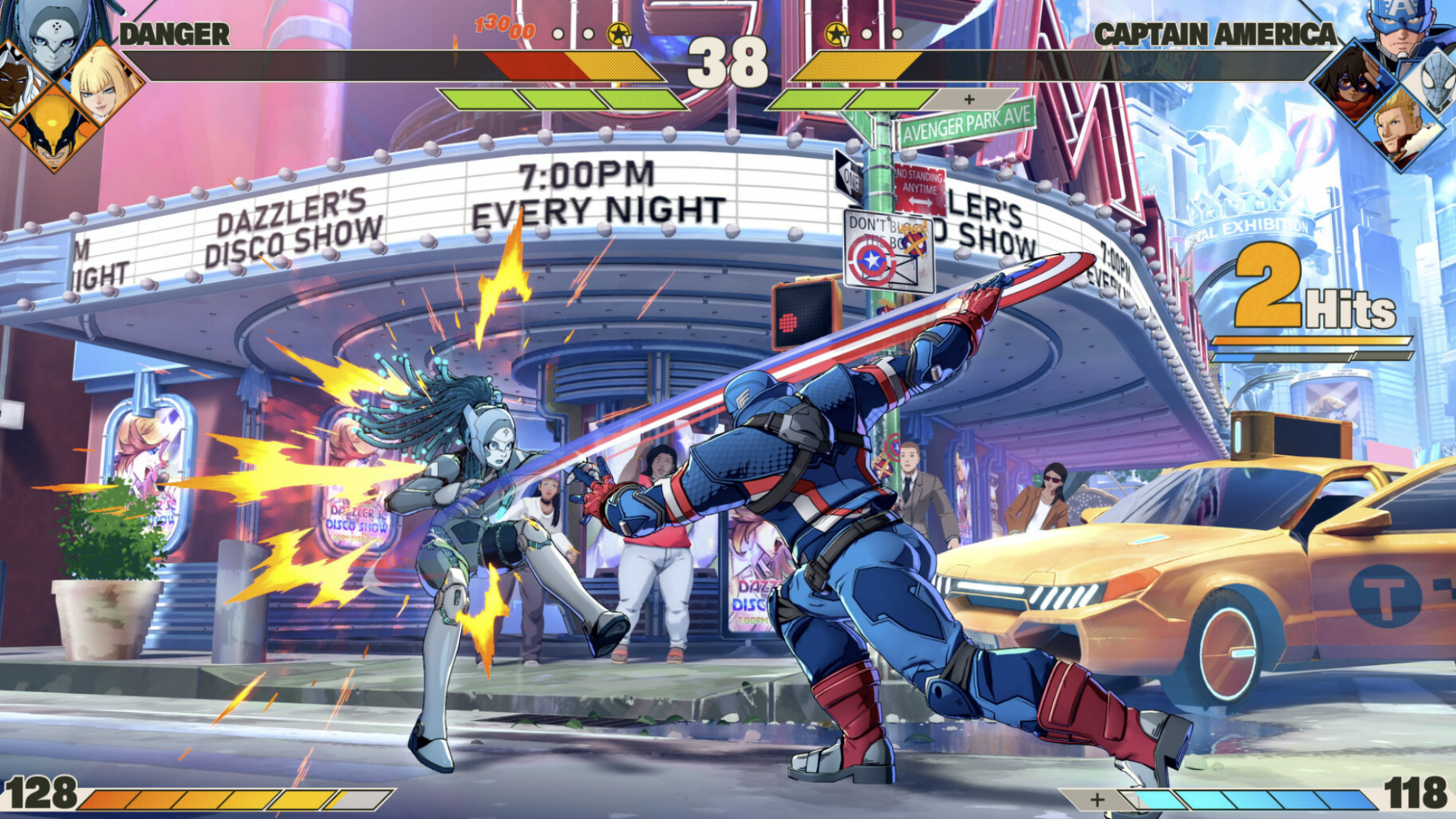
The launch roster runs 20 characters, mostly Marvel heroes and villains, including Captain America, Iron Man, Spider-Man, Storm, Doctor Doom, Wolverine, Ms. Marvel, Magik, Danger, Ghost Rider (Robbie Reyes), and Peni Parker.
The big mechanical hook: it’s a 4v4 fighter where all four of your characters share one health bar. You don’t pick a team and then lose them one at a time. You pick a team and they all live and die together, with mechanics that add and remove characters from the screen mid-match.
That’s the whole pitch. Marvel meets Arc System Works meets a tag system that’s genuinely different from anything that came before it.
Is This For Adults Who Don’t Play Fighting Games Anymore?
Honest answer: yes, with a caveat.
The accessibility features are real. Marvel Tokon ships with a dual input system. You can play with traditional motion inputs (the quarter-circle, dragon punch, and so on that you learned in Street Fighter II) or with Quick Skill Inputs that turn special moves into single-button presses. This is the same model as Street Fighter 6 Modern controls or Granblue Fantasy Versus. The simplified input does slightly less damage than the motion version, so competitive players have a reason to learn the harder controls. The casual you, playing on a Saturday afternoon, can hit every move in the game with one button.
That accessibility floor matters. Most fighting games “have” accessibility features that turn out to be unusable in real play. Tokon’s are real. You can play through the story mode and most online casual matches without ever touching a quarter-circle input.
The caveat is that this is still a fighting game. You will lose a lot online if you don’t put time into the basics. The basics are smaller than they used to be (block, throw, anti-air, basic combo strings), but they’re not zero. If “having fun” for you means winning consistently online, you’re in for the standard fighting game learning curve. If having fun means landing cool moves, watching Marvel characters do Marvel character things, and playing through story mode at your own pace, you’re going to have a great time from day one.
The Quick Skill Input System (Why This Matters)
Press one button, see Iron Man’s repulsor blast. Press another, see Storm summon lightning. The Quick Skill Inputs map your specials and supers to easy combinations that don’t require remembering motion inputs.
Quick Skill versions deal slightly less damage than the traditional motion-input versions of the same moves. The exact number is around 80-85% damage on most specials per Arc System Works’s published numbers. That’s enough of a gap to matter at high-level competitive play and not enough to matter when you’re learning the game.
I’d recommend most people start with Quick Skill on. Learn the characters with simplified inputs. Once you’ve found a main and feel comfortable with the rhythm of the game, switch to motion inputs only for the moves you use most often. Don’t try to learn all 12-15 specials per character on motion. Just learn the one or two you actually do in a real match. The damage difference for the moves you never use is irrelevant.
This is the same path competitive Street Fighter 6 players took when Modern controls launched. The pros stayed on Classic. The casuals stayed on Modern. The middle tier learned hybrid setups where they used Modern for some moves and Classic for others. That hybrid path is the right one for an adult who wants to enjoy the game without it becoming a part-time job.
The 4v4 System in Plain English
The shared health bar is the part that confuses people. Here’s how it actually works.
You pick four characters before the match. One of them is your “leader,” the character you control. The other three start the match unavailable. Your starting health bar is a quarter of your team’s total possible health, and your team’s super meter (called the Skill Gauge) is also at quarter capacity.
You unlock additional teammates during the match by:
- Landing a throw on your opponent
- Triggering certain stage-transition moves
- Losing a round (the game grants you an extra teammate to even the odds)
Each new teammate adds to your shared health bar AND your maximum super meter, so you actually get stronger as the match goes on. This is the opposite of how Marvel vs. Capcom worked, where losing characters made you weaker. Here, falling behind makes you slightly stronger since you get more characters faster.
Matches are best-of-five rounds. The first round is always 2v2. By the final round, both teams usually have all four characters available, and the match becomes a full-roster team battle.
The mechanic to remember is that the team-up attacks (Assemble system) get exponentially better as you unlock more teammates. The Super Assemble move lets you chain up to three character supers in a row for huge damage. This is the screen-clearing moment Marvel fighting games are built for, and it’s the most fun mechanic in the game.
Starter Character Recommendations
If you’re new to fighting games or returning after years off, pick from these five characters. They have the cleanest learning curves and reward you for not knowing 30 combos.
Captain America. Balanced moveset, good ranges, projectile (shield throw), strong anti-air. The “default option” of fighting games. Every Arc Sys game has one, and Cap is this one’s. Play him as you learn the systems and switch later if you want something specific.
Iron Man. Eight-directional aerial movement plus flight. He can fight in the air freely, which is unusual and gives you a third dimension to work with. Repulsor projectile, unibeam super, decent combos. The character to pick if you want to feel like you’re playing a Marvel game and not a generic fighter.
Ghost Rider (Robbie Reyes). Heavy hitter who fights at range with the Hellfire Chain, whipping enemies from a distance and bouncing them off the ground with fire-imbued attacks. Fire works as both an offensive and defensive tool. Good pick if you want big damage without needing tight close-range execution.
Ms. Marvel. Long-range stretching attacks, lots of safe pokes from across the screen. No aerial dashes (a downside for some players), but if you like fighting at range and dictating space, she’s a great pick. Don’t try to play her up close.
Wolverine. Rush-down character with simple inputs and high damage. The “go fast and hit hard” pick. He doesn’t have the screen control of Cap or the range of Ms. Marvel, but you can win matches with him by being aggressive and hitting buttons in roughly the right order.
Avoid for week one: Storm (wind manipulation makes her whole moveset conditional, technical character), Doctor Doom (complex zoning, requires understanding of multiple meters), Magik (teleport-heavy mix-up character with a steeper execution curve).
Your First Three Weeks With the Game
Here’s the actual learning path I’d run.
Week 1: Story mode and Quick Skill. Don’t go online yet. Play through the story mode with Quick Skill Inputs on. Try multiple characters in story missions. Find a starter character you like the feel of. Spend 30-45 minutes in training mode learning their five most-used moves (light combo, medium combo, special 1, special 2, super). Don’t worry about combos longer than three hits yet.
Week 2: Online casual + tag system. Switch to ranked-adjacent casual matches online. Lose a lot. Don’t read the tier lists. Pay attention to how the Assemble system feels in a real match: when you can land a throw to bring in your second character, when stage transitions trigger, when you should save your super meter for an Assemble combo vs. cashing it in. The tag system is the whole game. Get the rhythm of it before you worry about combos.
Week 3: Pick a main, build a team. Now choose a character you’ve fallen for and pick three teammates whose assists complement them. The team composition discussion is where Tokon gets deep. Some characters have assists that lock down opponents as you set up, others have assists that extend combos, others have assists that recover meter. Look up team recommendations for your main character on the official Discord or fighting game wikis. Stick with one team for at least a week before swapping.
After week three: You’re now playing the game. Decide whether you want to push for ranked play (in which case start learning motion inputs for your main’s signature moves) or stay in casual (in which case keep playing with Quick Skill and enjoy yourself). Both are valid. The game is built for both.
This is the same kind of structured-but-flexible approach that works for managing the rest of your gaming time as an adult. Pick a thing, give it 90 minutes a week for three weeks, then decide if it’s still earning its slot.
What You Don’t Need to Learn Yet
There are 47 system mechanics in Marvel Tokon. As a beginner, ignore most of them.
You don’t need to learn frame data. The community will publish charts within a week of launch. Look at them once you’ve played 30+ hours and know what specific matchups feel frustrating. Until then, frame data is noise.
You don’t need to learn optimal combos. The optimal combo for most characters at high level is 20+ inputs and shaves 80% off the opponent’s health bar. The combo you can actually land in a real match is 5-8 inputs and shaves 25-30%. The 5-8 input combo is good enough to win casual matches and most ranked matches up through high gold or low platinum.
You don’t need to learn the tier list. Tier lists are written for tournament play. At your level, character mastery beats character strength every time. Pick the character you like. Get good at them. The tier list will be obsolete in three months anyway when the first balance patch lands.
You don’t need to learn anti-air timing in week one. Block, throw, and basic combos will carry you through your first 20 hours. Anti-airs are a week-three or week-four concern.
Five Weeks In, This Is the One to Catch Up On
Marvel Tokon: Fighting Souls is the most accessible big-roster fighting game to launch in 2026 for an audience of adults who have too many other games to play. Arc System Works has built two layers into it. There’s a casual layer where you can play Marvel characters in tag battles with simplified inputs and have a great time without ever touching a motion input. And there’s a competitive layer that goes as deep as Guilty Gear Strive for the players who want to commit.
You don’t have to pick which layer you live in on day one. Start with Quick Skill, play through story, find a character or two you click with, and let the game tell you whether you want to go deeper. The roster is big enough, the accessibility floor is low enough, and the moment-to-moment fighting is satisfying enough that even a 10-hour relationship with this game is worth the $60.
Just don’t read the tier list. Just don’t.
Looking for more guides written for adults with limited time? TAG Pro launches December 1, ad-free gaming media for adult-mode gamers. Founding seats at twoaveragegamers.com/founding.
Who are you picking up Tokon? What’s your starter team looking like? Drop it in the comments or in the TAG Discord. I’m curious how many of us are picking this up vs. waiting for the inevitable price drop.