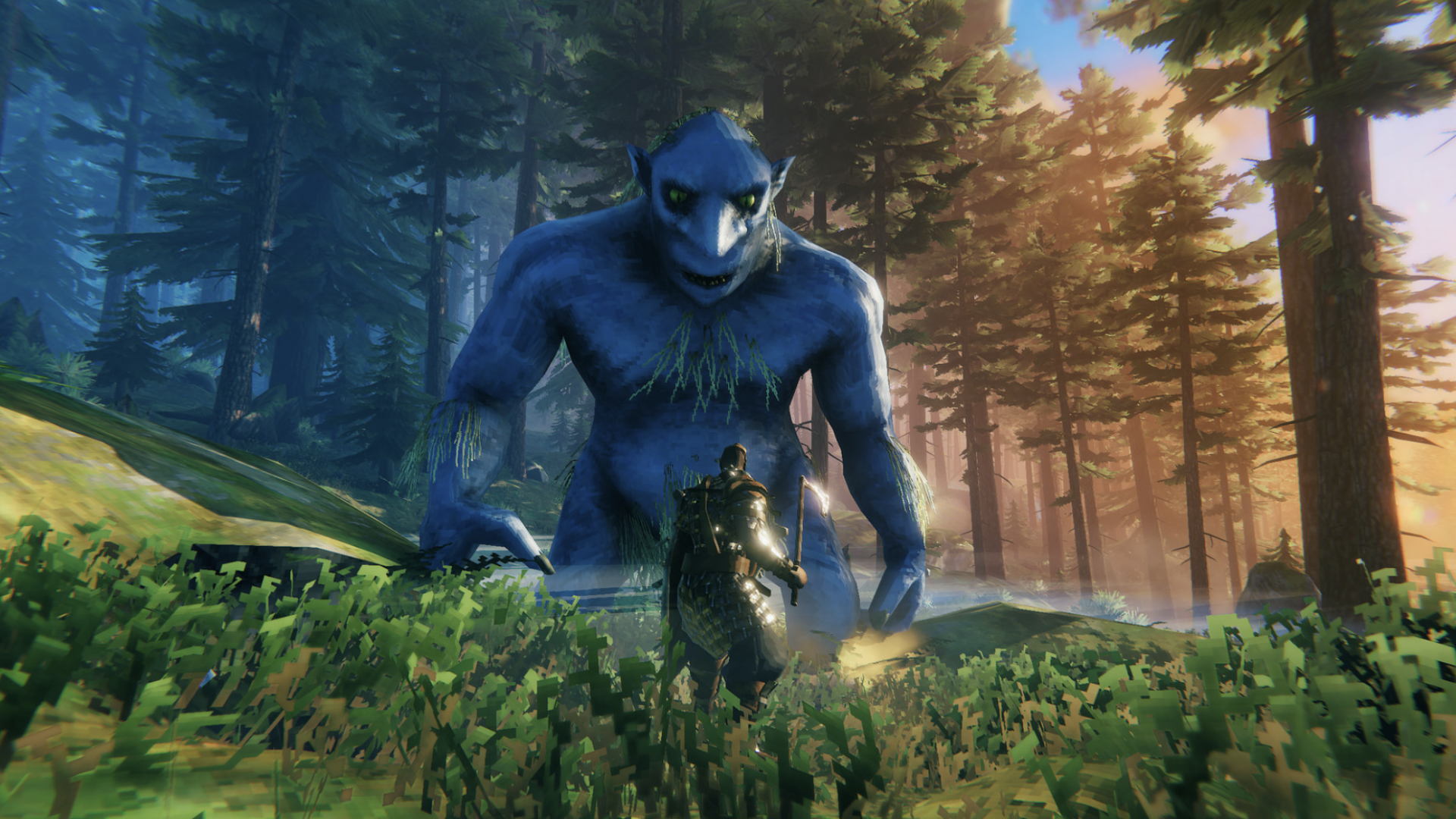

Real answer: yes, but only if you solve the hosting problem up front and both accept that you’re going to level up at different speeds. It’s a genuinely good two-player game. It is not automatically a good two-player game just because two people fit in the same world, and that distinction is where most couples get frustrated with it in the first month.
Valheim hit 1.0 on September 9, 2026, with the Deep North update and, more relevant to this question, full crossplay across PC, Mac, Linux, Xbox, PS5, and Nintendo Switch 2. That last part matters a lot if you and your partner own different hardware, which is a real reason couples have skipped this game before now. I haven’t played the Deep North yet and I’m not going to pretend I have. What I can walk you through, based on the mechanics Iron Gate has documented and how this game has actually worked for years, is whether the co-op fundamentals hold up for two people with real jobs and different amounts of free time.
The Question Behind the Question
“Co-op shaped” is doing a lot of work in that headline, so let me define it. Plenty of games technically support two players and fall apart as an actual shared experience. One person ends up doing everything while the other watches, or the difficulty assumes a full squad and punishes a duo, or the game structurally can’t handle one partner playing Tuesday nights and the other only playing Saturday mornings.
The question for Valheim specifically: does the game’s actual design (not the marketing, the systems) hold up when it’s exactly two people, with different schedules, different skill levels, and different appetites for combat versus building.
Friction Point One: One of You Wants to Build, One Wants to Fight
This is the most common complaint about survival co-op games in general, and it’s worth being honest about how Valheim handles it rather than pretending it’s solved.
Valheim doesn’t force role specialization. Both players can mine, chop, build, and fight. Nothing locks you into “the builder” or “the fighter.” That’s good news structurally, because it means neither partner is stuck doing chores while the other has the fun part.
The friction is softer than that, though, and more human than mechanical: bases in Valheim take real time to make look good, and boss fights and biome-clearing take a different kind of time. If one of you wants to spend a session on roof angles and the other wants to go find the next boss, that’s a scheduling conversation, not a game-design problem, and Valheim doesn’t do much to force a compromise either way. My honest suggestion, based on how these survival co-op splits usually shake out (this is the exact same friction I dug into for Helldivers 2 as a couple, a very different game with the same underlying tension): agree ahead of time on how you’re splitting a session, builder time versus combat time, rather than discovering the mismatch mid-session and one of you quietly resenting it.
Friction Point Two: The Hosting Problem, Which Is the Real One
This is the friction point that actually breaks Valheim for couples, more than any combat or building disagreement, and it’s almost never mentioned in marketing copy.
Valheim supports two ways to run a world together. Peer-to-peer hosting means one of you starts the server from inside the game, and the world only exists while that person is online. If your partner wants to log in solo on a Tuesday to knock out some chores in the world, they can’t, unless they’re the one who normally hosts. The world is tied to whoever’s PC (or console) is running it.
Dedicated server hosting solves this. It’s a separate process (self-hosted on a spare machine, or rented from a host) that keeps the world running independent of either of you being logged in. Either partner can drop in whenever their schedule allows, solo or together, and nobody strands the other person’s progress by going to bed.
If you and your partner have genuinely different weekly time budgets, meaning one of you gets three evenings and the other gets one Saturday afternoon, a dedicated server isn’t optional, it’s the thing that makes the mismatch survivable. Without one, the lower-availability partner is stuck waiting for the higher-availability partner to be online, which turns a shared hobby into a scheduling dependency. It’s a small setup cost (a few dollars a month through a hosting service, or free if you’ve got a machine that can stay on) for a problem that otherwise shows up every single week.
Friction Point Three: Different Skill Levels and Different Progress
Here’s a piece of good news that doesn’t get explained clearly enough: character skills in Valheim (weapon proficiencies, running, jumping, blocking, and so on) level up individually per player, not shared across the world or the party. Your partner grinding sword skill for three hours doesn’t put a single point toward your bow skill. That sounds like it could be a problem, and it’s actually the opposite. It means neither of you is waiting on the other to “catch up” in a shared meter. You each progress at exactly the rate your own play time earns, which is the correct model for two people who don’t play the same number of hours.
Where the mismatch actually shows up is gear and biome access, since those are tied to the shared world state, not individual characters. If one partner races ahead exploring and gearing up while the other’s real-life schedule keeps them a tier behind, that partner can end up under-equipped for whatever fight the more available partner wants to pick next. The game does have a soft correction here: enemies get roughly 30% more effective health for each additional player nearby, which is meant to keep fights challenging for a group rather than trivial, but it doesn’t rebalance based on who’s actually contributing what gear. Practical fix, and this is genuinely just a conversation, not a system: the more available partner holds off on the next boss fight until the other one is geared for it, rather than treating “I have more hours” as “I get to set the pace.” This is the same dynamic we covered for couples where one partner is just better at platforming: the game not enforcing balance doesn’t mean you can’t choose to.
Friction Point Four: What Happens When Someone Dies
Death in Valheim has real stakes, and couples should know what they’re walking into before it happens mid-argument about who pulled aggro.
When you die, your full inventory, including equipped gear, drops into a gravestone at the exact spot you died. You respawn (at your bed, or the world spawn if you haven’t set one) and have to run back to recover it, which is its own small adventure if you died somewhere dangerous. The default world settings also cost you a chunk of skill experience on death, though there’s a ten-minute grace window afterward where you won’t lose more from a second death right away.
Here’s the part that matters for a two-player world specifically: world hosts can turn all of this down or off entirely through world modifiers, independent sliders for combat difficulty, death penalty, resource rates, raid frequency, and portal restrictions. If one of you is anxious about losing hours of gear progress to a bad fight, that’s a five-minute settings change when you start the world, not something you have to just live with. Couples who’ve played survival games together before, the way Don’t Starve Together handles death and resource loss is a useful comparison point since it’s a similar genre with a similar “your mistakes cost shared resources” structure. Valheim is more forgiving by default and fully adjustable if you want it gentler still.
One more mechanic worth knowing before you plan a “you go get materials, I’ll build” split: valuable ore can’t be sent through the game’s portal network by default. If your partner is mining somewhere far from base, they’re carrying it back on foot, not zipping it home instantly. That’s a real logistics constraint on how you divide labor, and it’s worth planning your base location around rather than discovering it after an hour-long hike.
So, Is It Actually a Good Two-Player Game
Yes, with the caveat that “good two-player game” and “technically supports two players” are different claims, and Valheim only earns the first one if you do a little bit of setup work.
The parts that matter most for a couple are handled well by design: individual skill progression so nobody’s waiting on the other, no forced role lock so you can both build and fight, adjustable death penalties so the stakes match your actual risk tolerance, and now full crossplay across PC, PlayStation, and Switch 2 so hardware differences don’t block you from playing together at all. The part that isn’t handled well by default, hosting, is also the easiest one to fix, and it’s the one piece of advice I’d give any couple before their first session: set up a dedicated server if your schedules don’t match, don’t rely on peer-to-peer hosting and hope it works out.
None of this requires hands-on time with the Deep North to answer. These are the systems that determine whether Valheim works for two people, and they were already true before the 1.0 update. What 1.0 changed is who can access them, not whether they hold up. Get the hosting sorted, agree on how you’re splitting build time versus fight time, and the rest of the game does its part.
Looking for more real answers on what actually works for two people, not marketing copy? TAG Pro launches December 1, ad-free gaming media for adult-mode gamers. Founding seats at twoaveragegamers.com/founding.
Have you and a partner tried Valheim together, before 1.0 or since? What broke down, and what actually worked? Drop it in the comments or in the TAG Discord. I want to hear the hosting horror stories specifically.